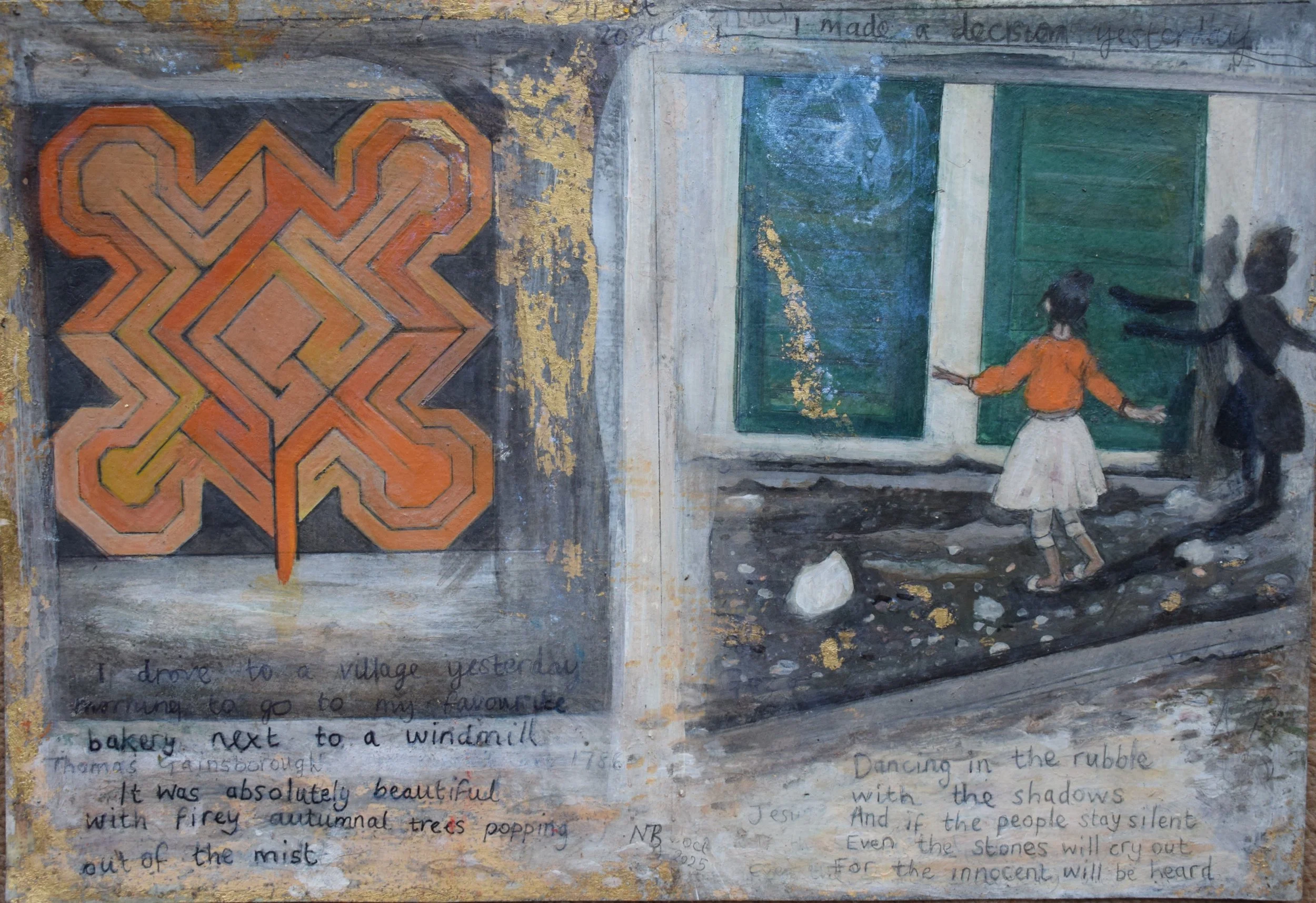
dancing with the shadows and the Ely labyrinth
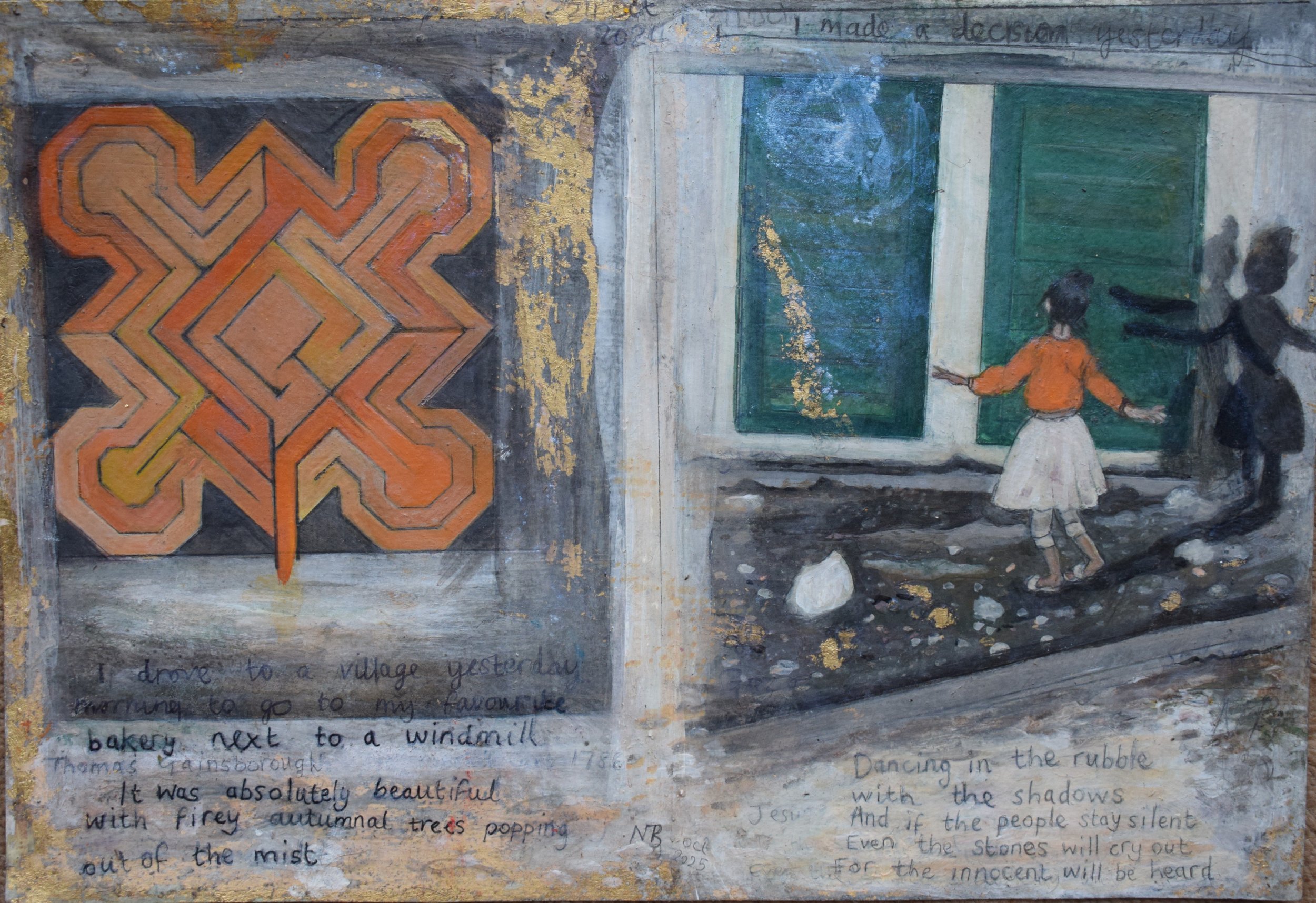
The picture of the girl dancing in the rubble with her shadows on the right side, facing the labyrinth on the opposite page has morphed into its own piece of work. They began as two separate pages in the sketchbook, until I noticed that there appeared to be a narrative between them.
The labyrinth is seen in Jungian theory as part of the ‘shadow work’, (although my understanding is that Jung never actually used that term.) ‘Our ‘shadow’ is the subconscious, a neutral place of our deeper hidden parts. It could be repressed aspects of our personality, although it could also be things in the unconscious that were never conscious in the first place.’ (r/jung reddit) The labyrinth is interpreted as an archetypal symbol in human culture and psychology, and as representation of the individuation process.
‘The Personal Unconscious contains lost memories, painful ideas that are repressed (i.e. forgotten on purpose,) subliminal perceptions, by which are meant sense-perceptions, that were not strong enough to reach consciousness, and finally, contents, that are not yet ripe for consciousness. It corresponds to the figure of the shadow so frequently met in dreams.’ (C. Jung – V7.1 – 103) .
The Hopi people (Southern Western Native American) understand the labyrinth as a symbol of the journey through life that leads to one’s destiny. It illustrates the search for balance in the physical, social, mental and spiritual realms while moving towards our dreams and goals.
My interpretation in this painting is of the girl and the labyrinth as a whole; she is facing horrors and yet free in her spirit with a joyful dance. Dancing in the dark with the lights creating the shadows. A depiction of a person working with the shadowy places as they walk the inner journey.
The image of the girl is from a video taken in Gaza as she dances amid the destruction. I began painting Gaza in response to watching the news outlets gaslight and silence what was happening. The pictures became intimate responses that helped me make sense of the senseless harming of human beings. It became an exercise in holding the preciousness and sacredness of life that I watched being discarded.
In one hand aware of the frailties of my own body, and the fight to keep it working, and in the other watching beautiful lives be taken in terrible ways. I had been unwell and in hospital, and as I walked the corridors to appointments and treatments, I was acutely aware of how vulnerable I felt, yet I was watching hospitals being bombed daily on the news feed. I couldn’t fathom how this was allowed to happen to a place meant for healing.
The drawings of the labyrinth started when I had to go to Ely hospital for a scan. I remembered reading that there was a labyrinth at Ely Cathedral, and so when I went to the hospital, I also went to see the labyrinth in the cathedral.
I began drawing the angular labyrinth design of Ely Cathedral repeatedly and it became a therapeutic ritual; it helped bring balance as I worked in tandem on the Gaza paintings. This ancient object and symbol helped to ground and centre me. The meditations with the labyrinth, focussing on painting the path helped guide me into a place of stillness, soothing the emotional onslaught of the heart-breaking images of war and grief.