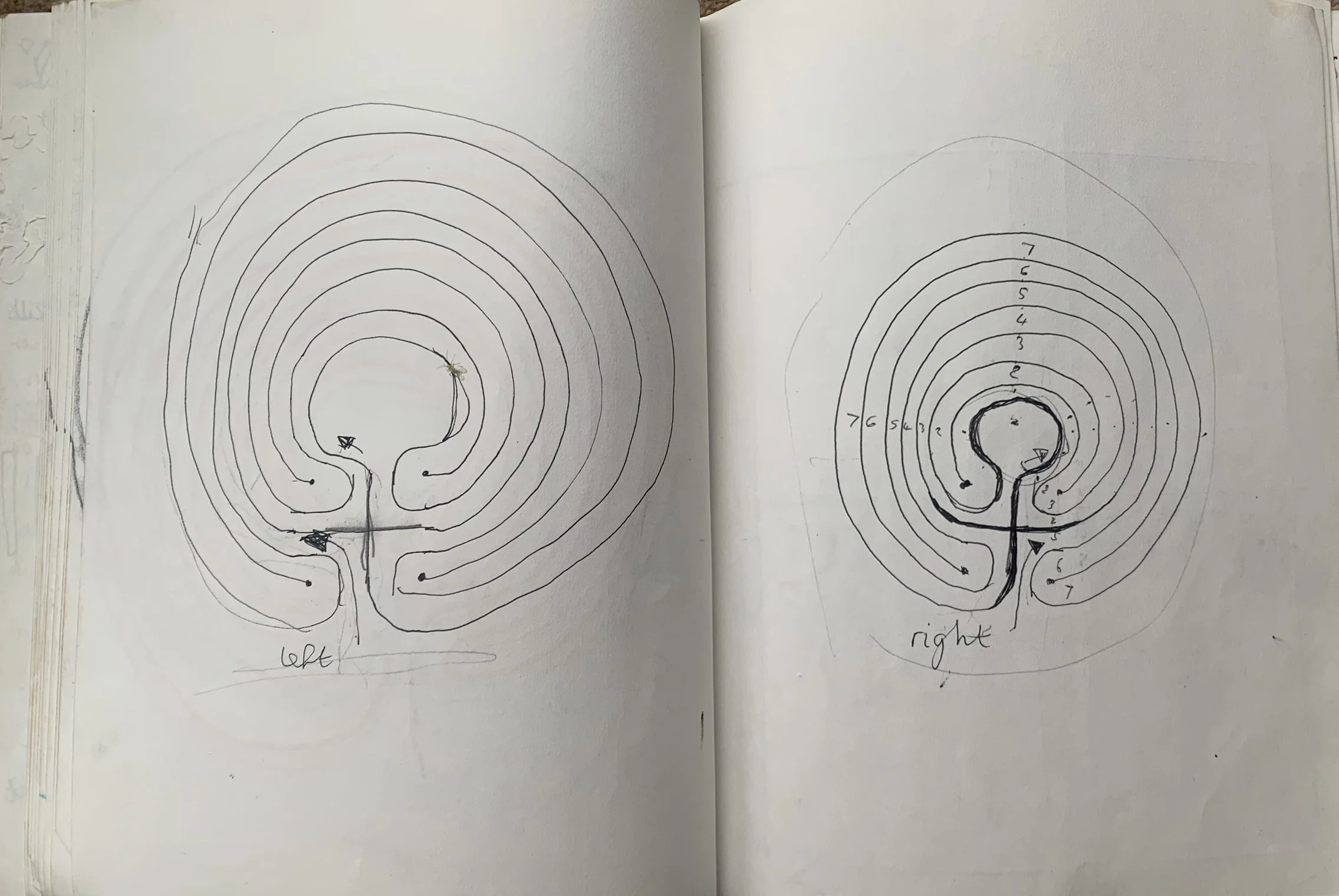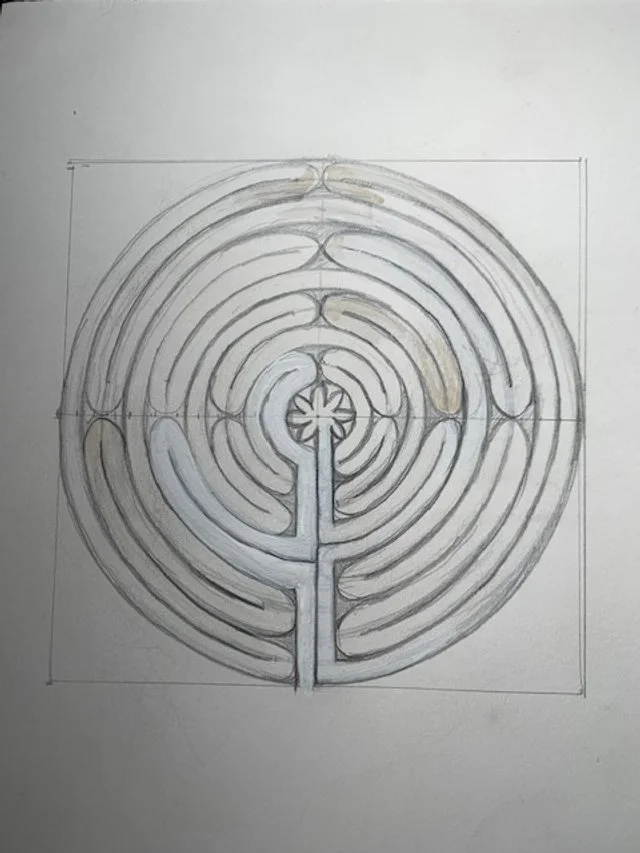
‘The labyrinth is an ancient symbol that relates to wholeness. It often combines the imagery of the circle and spiral into a meandering but purposeful path.’
labyrinth
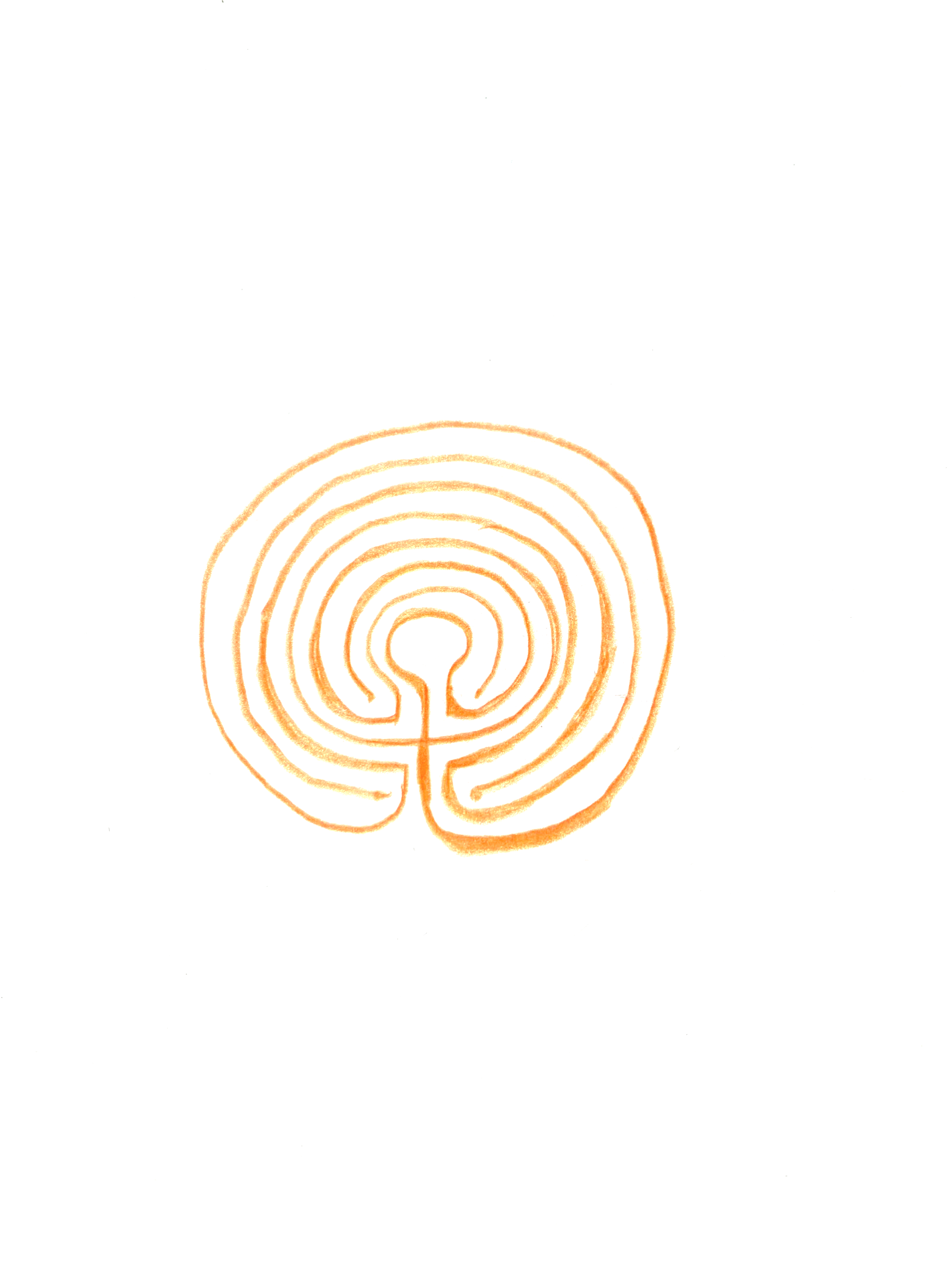
‘The labyrinth is an archetypal motif, a metaphor for navigating complex ideas. It is one of the most ancient and widespread symbols found across human cultures. It has been found in prehistoric rock carvings and cave paintings, found upon ancient pottery and mosaics, and intricate patterns on floors of medieval cathedrals. An overarching emblem that has appeared throughout cultures that Carl Jung called the ‘collective unconscious.’(u/GetTherapyBham reddit)
Labyrinths have been used both as a communal experience and as a personal journey. A winding path of self-discovery folding in and out, seemingly going back on itself whilst the movement is continually towards the centre. The centre being a place of stillness and anchoring, a place of rest and reflection.
Some of the cultures where labyrinths have been found are Hopi Native Americans, India, Crete, Norway, France, and the British Isles. There is evidence of the most ancient of labyrinth designs (the one called the seed labyrinth) across southern Europe and North Africa in various forms, going back over thousands of years. The labyrinth was at a later time, around c 165 BCE - 400 CE seen in Roman mosaic designs, more complex, small and not walkable.
Around the end of the 9th century a monk called Otfrid took the classical seven circuit labyrinth pattern and added four extra circuits creating the more complex eleven circuit design. Known as the ‘medieval labyrinth’ it was used within the Christian faith as a pilgrimage where the walk to the centre was a metaphor for the walk to Jerusalem. The most famous at Chartres Cathedral in France, made in the 13th century. Currently there seems to be a resurgence of interest in the labyrinth that has been growing over the past decades.
‘Maybe there is a collective unconscious need for unique spaces like labyrinths. Maybe we are at a time where we need help in recovering a more balanced, reflective and inclusive way of living together on this planet.’ (Di Williams ‘Labyrinth - Landscape of the Soul’.)
I come to The Labyrinth as an artist and spiritual sojourner; within the twists and turns and trickster pivot. Trickster, as my friend calls it when she walks the path but that’s not quite right because the path stays the same and you just keep on it going forward. Nevertheless it plays with the mind, creating a sense of friction and making one question whether a turn was missed. In general with the labyrinth there is no actual trickery involved distinguishing it from a maze which is created to play with the mind. Often a maze has high walls and many paths with dead ends whereas the labyrinth works from quite a different point as there is only one path and that leads to the centre with no intention of getting lost.
I feel like I’m connecting with something from the depths of the past, both of ancestors and of the land. It has awakened something in me that I see awakening in others too. To step upon the labyrinth and engage with it is to experience stepping into a physical meditation, as you follow the path there is no need to overthink, but surrender and trust that the meander will lead to the centre.
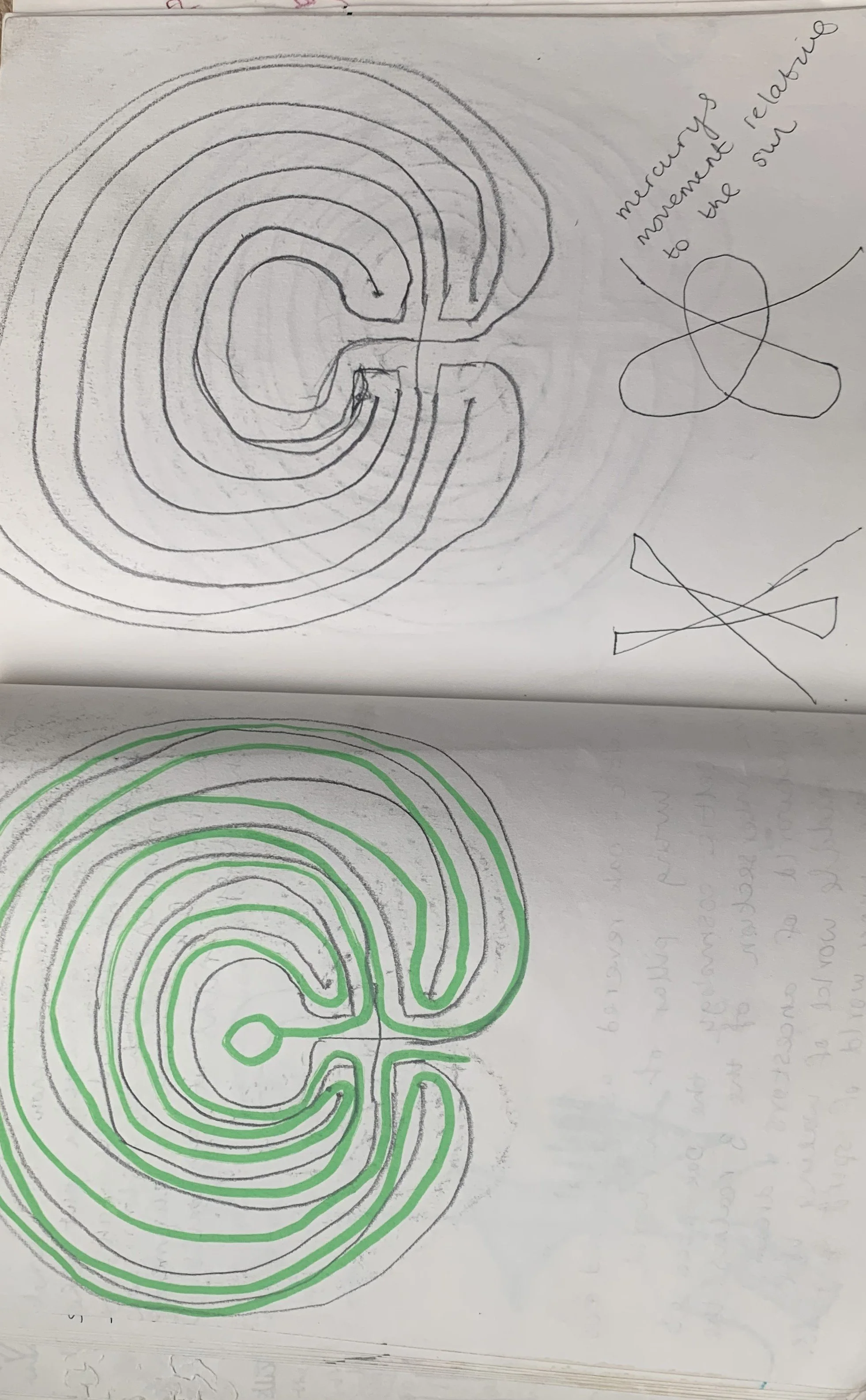
labyrinth - galleries
a gallery of photos following the study of, and working with, the labyrinth
labyrinth - stories
writings on the journey of creating and working with the labyrinth
A meander with a paint brush. I love drawing a labyrinth and then painting into it, reminiscent of a colouring book.
This particular labyrinth path is taken from the one at Chartres Cathedral, in France. An eleven circuit spiral that was created between 1200 - 1235 AD.