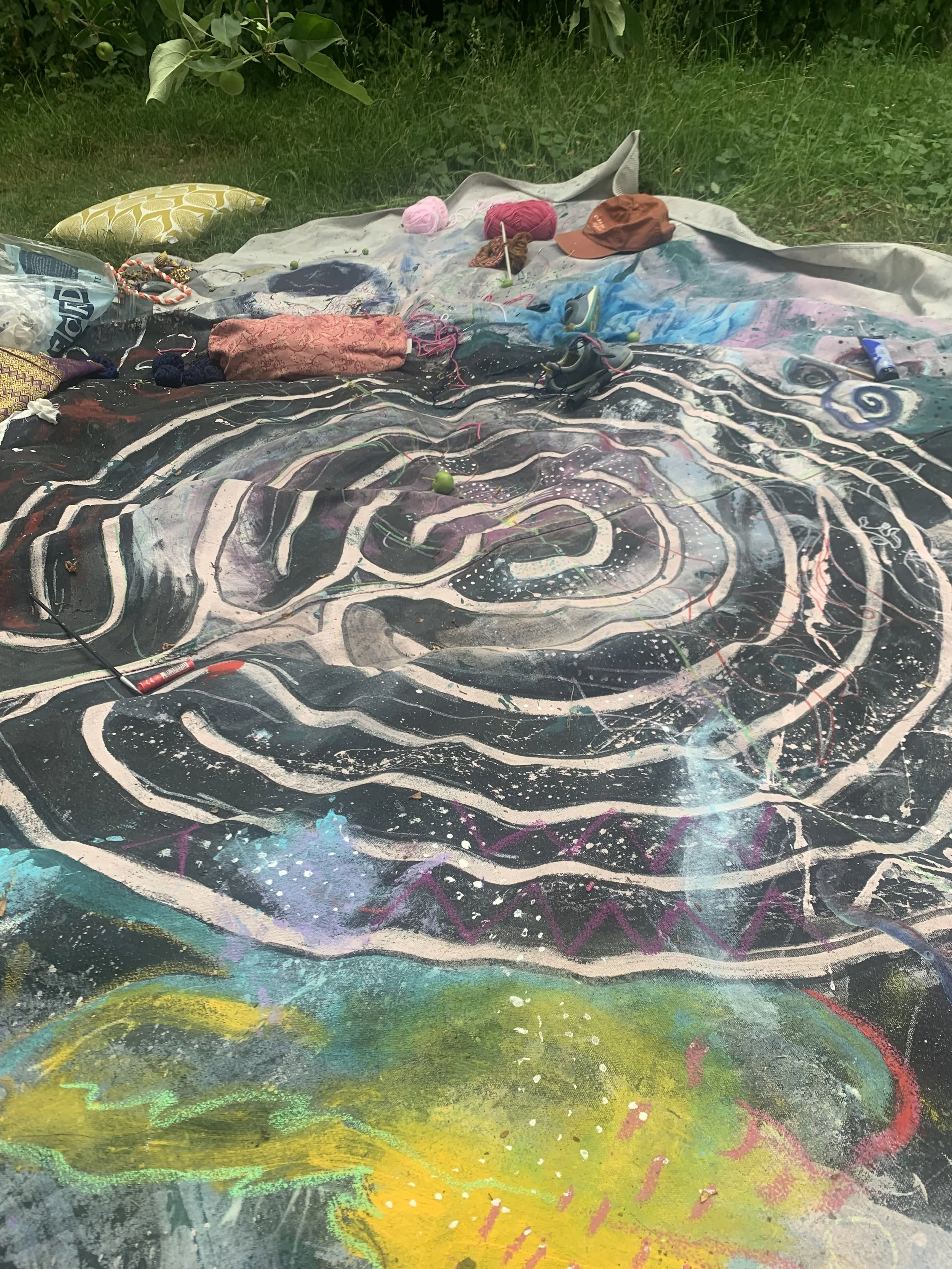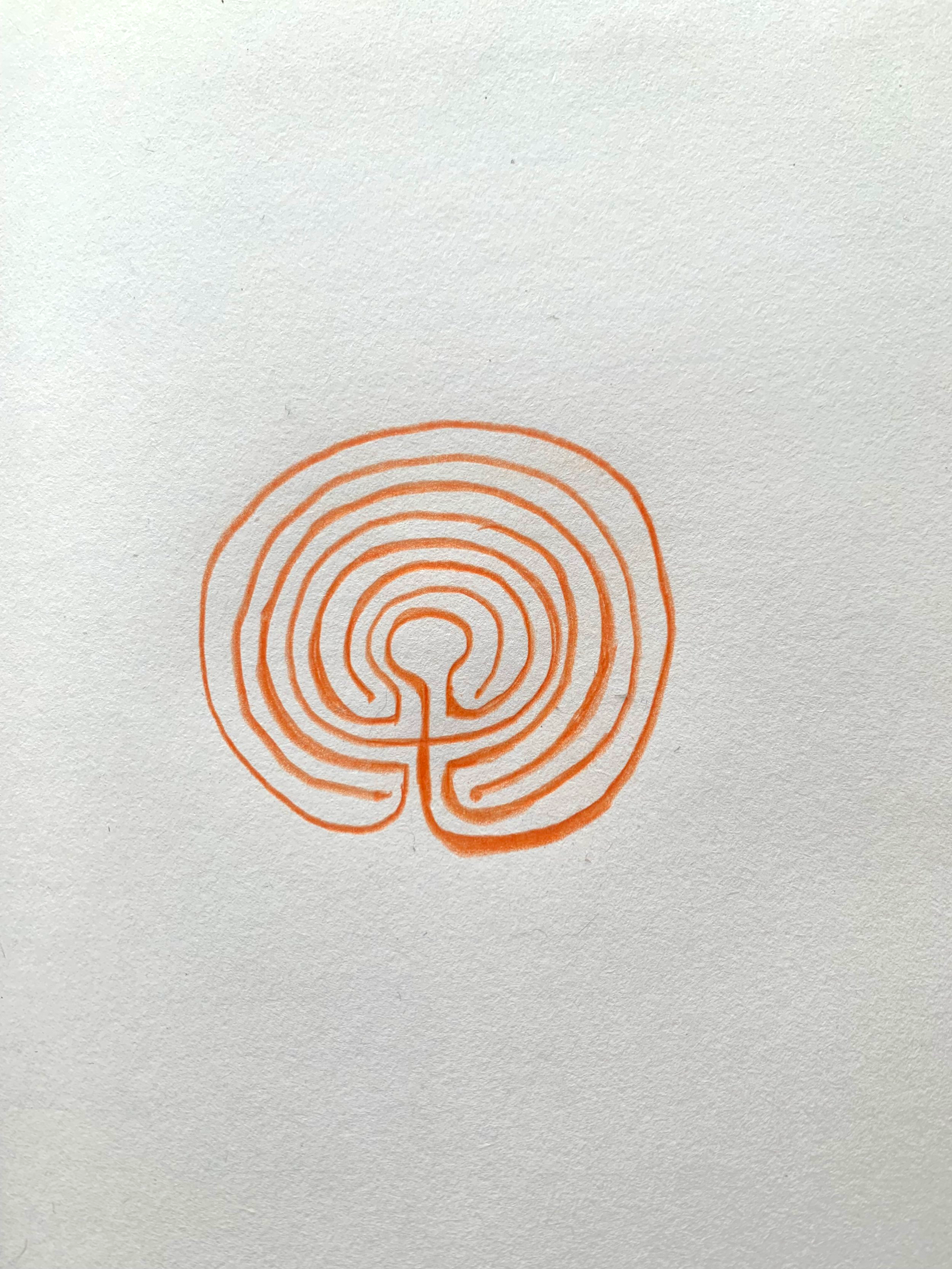
labyrinth
‘The labyrinth is an ancient symbol that relates to wholeness. It often combines the imagery of the circle and spiral into a meandering but purposeful path’.
The labyrinth is an archetypal motif, a metaphor for navigating complex ideas. It is one of the most ancient and widespread symbols found across human cultures. It has been found in prehistoric rock carvings and cave paintings, found upon ancient pottery and mosaics, and intricate patterns on floors of medieval cathedrals. An overarching emblem that has appeared throughout cultures that Carl Jung called the ‘collective unconscious.’
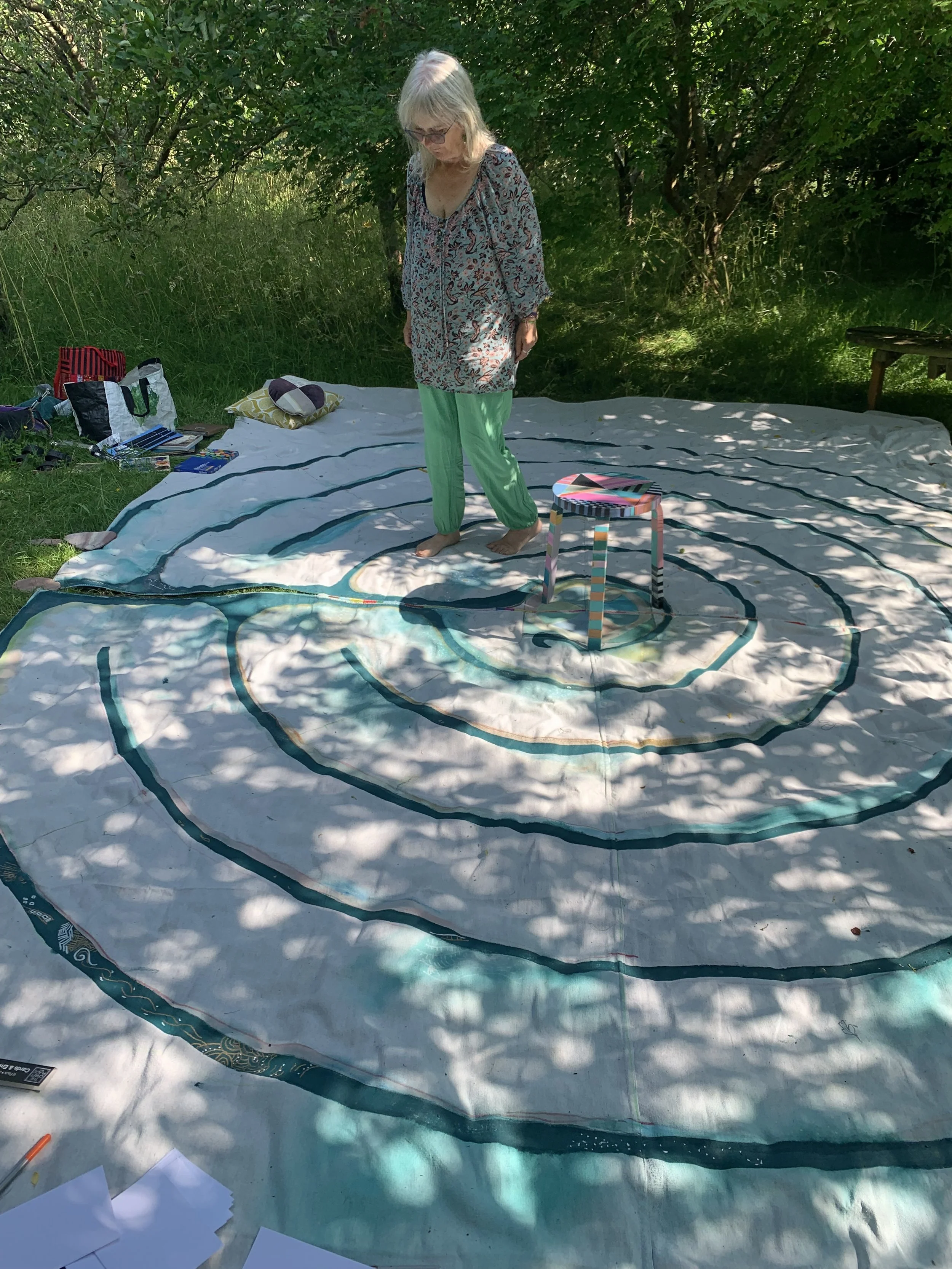
In Mediaeval times in Britain, within the Christian faith, it was used as a pilgrimage journey, where the walk to the centre was a metaphor for the walk to Jerusalem. Labyrinths have been used both as a communal shared experience, and as a personal journey. A winding path of self-discovery, folding in and out on itself, as we seem to go back on ourselves whilst the movement is continually towards the centre. The centre being a place of stillness, a place of anchoring, a place of rest and reflection.
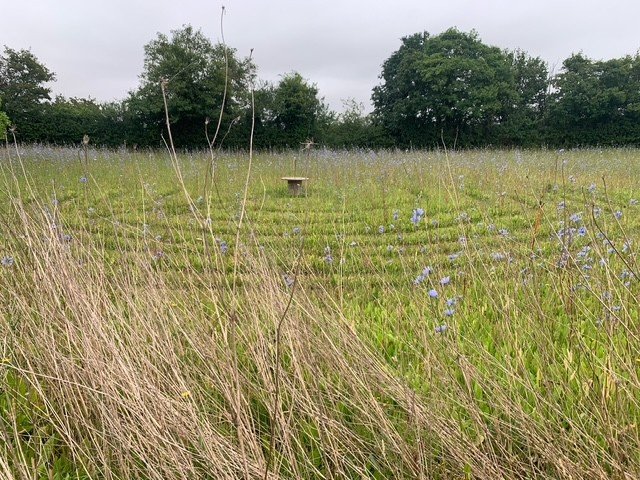
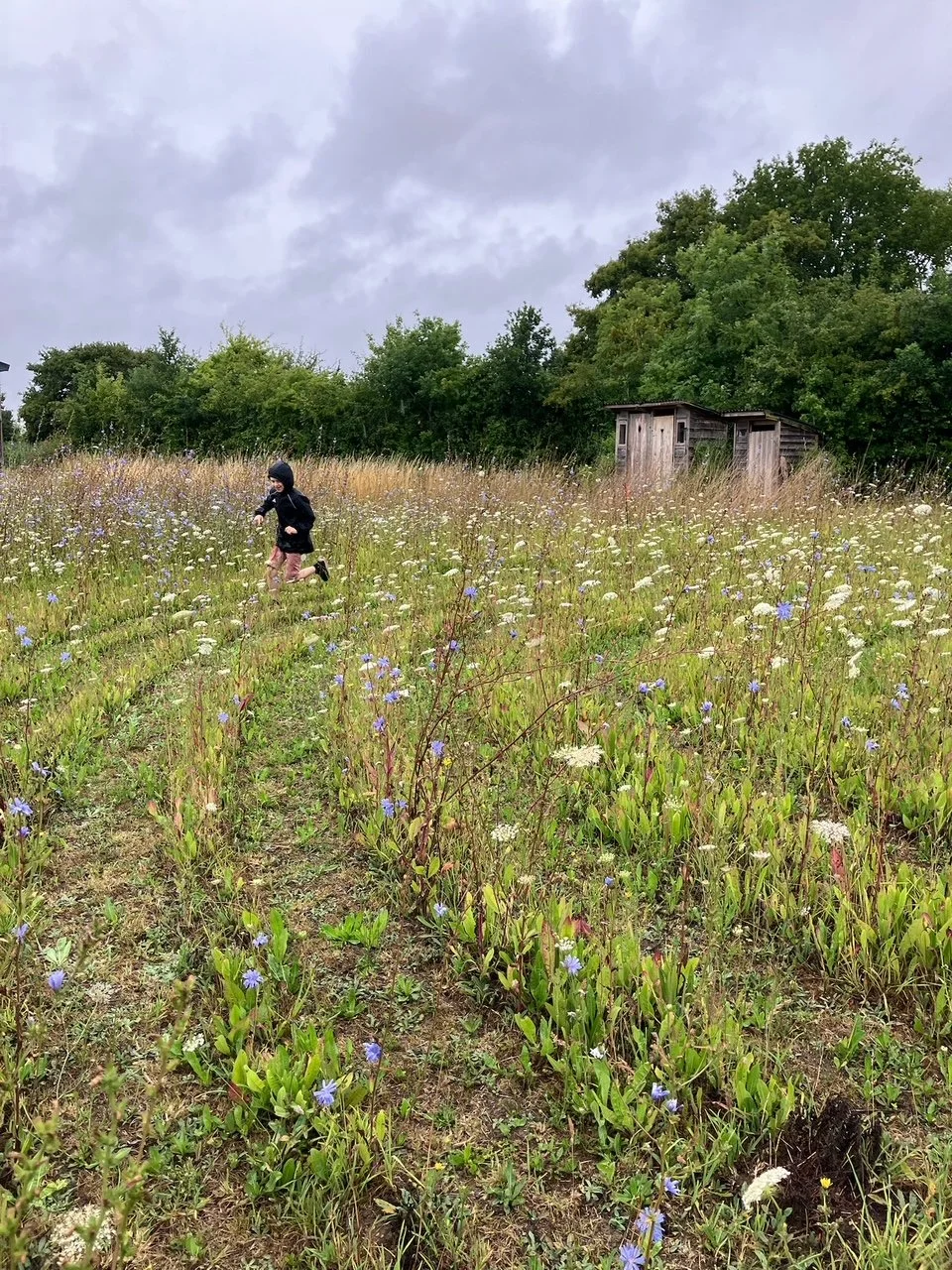
I come to The Labyrinth as an artist, and spiritual sojourner. It is my story of discovery and reflection with is twists and turns, its trickster pivot, its ebb and flow, comings and goings. Trickster, as my friend calls it when she walks The Labyrinth, but that’s not quite right, because the path stays the same and you just keep on it, moving forward. Nevertheless it plays with the mind, making you feel like there might have been a missed turn, giving a sense of friction. I feel like I’m connecting with something from the depths of the past, both of ancestors and of the land. It has awakened something in myself that I see awakening in others too. There is something both communal yet personal in the opportunity for inner reflection.
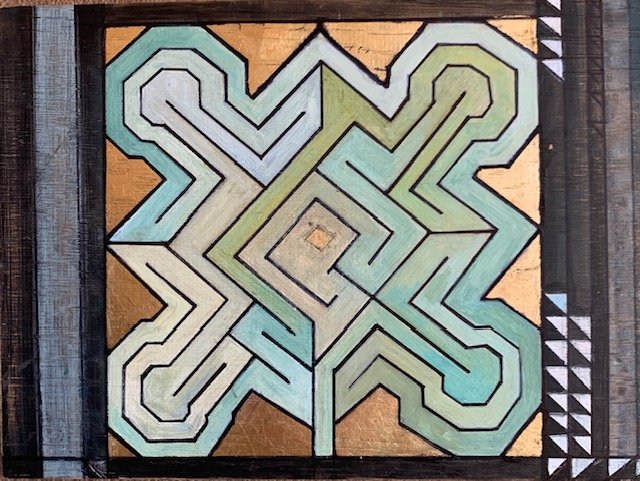
Some labyrinths appear quite simple, whilst others are more intricate, such as the one at Chartres Cathedral in France, made in the 13th century. In general with the labyrinth there is no actual trickery involved, which distinguishes it from a maze, which often has high walls, and many paths with dead ends, created to play with the mind by getting lost in it. Whereas The Labyrinth works from quite a different point, as there is no intention of getting lost. There is only one path and that leads to the centre. To step upon The Labyrinth and engage with it is to experience stepping into a physical meditation, as you follow the path there is no need to overthink, but surrender and trusting that the meander will lead to the centre. But sometimes because the Labyrinth is such an ancient and universal concept it doesn’t fit into a tidy package, sometimes the maze and the labyrinth are called the same thing.